
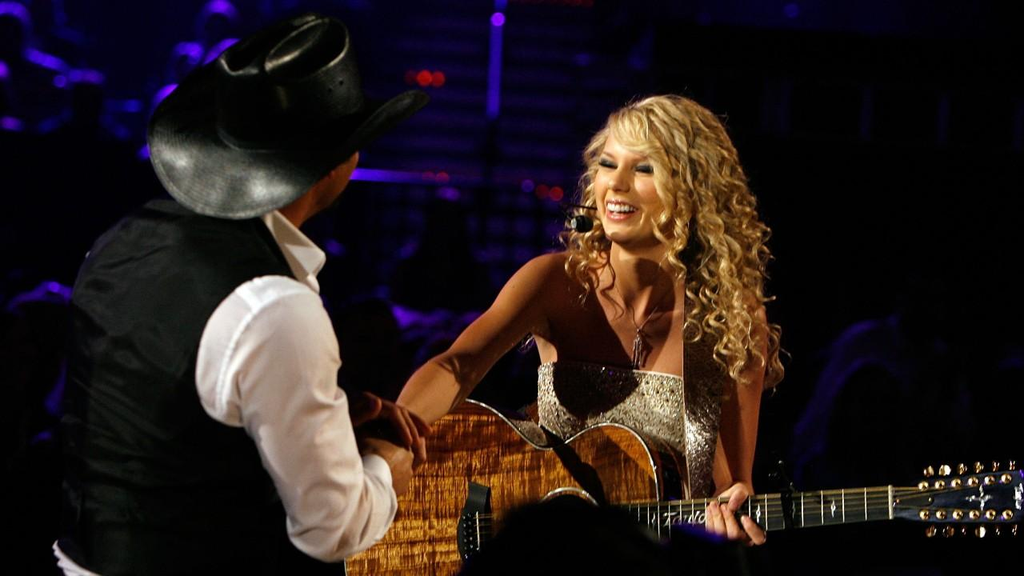
Twenty years ago, Taylor Swift was a teenage country singer introducing herself to the world with curly hair, an acoustic guitar and songs about young love, heartbreak and growing up.
Today, she is one of the biggest music stars on the planet.
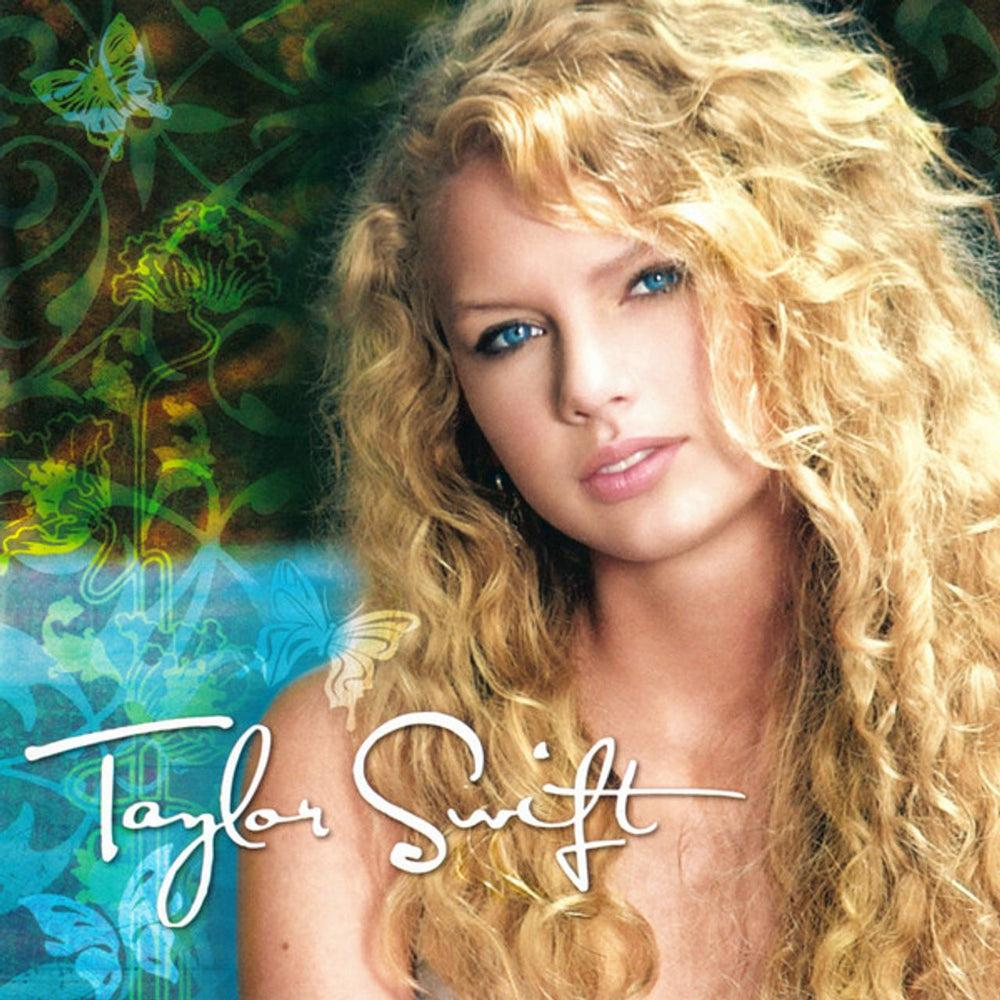
Taylor Swift’s self-titled debut album has officially reached its 20th anniversary, creating a wave of nostalgia among fans who have followed her journey from Nashville newcomer to global superstar.
But one detail from Swift’s earliest years is getting particular attention.
In a previously unpublished interview from the beginning of her career, the teenage singer spoke confidently about wanting to remain in music for the next 20 years.
Two decades later, that ambition has become reality.
The anniversary is more than a nostalgic celebration of an old album. It offers a remarkable opportunity to look back at where one of the most successful careers in modern music actually began — before the stadium tours, Grammy wins, billion-stream songs and worldwide phenomenon known as Taylor Swift.
Taylor Swift Released Her First Album as a Teenager
Taylor Swift released her self-titled debut album on October 24, 2006.
She was only 16 years old.
At the time, Swift was still establishing herself in Nashville’s competitive country music industry. She had signed with the newly formed Big Machine Records and was trying to convince country radio listeners that a teenager writing songs about her own experiences deserved to be heard.
The album introduced an artist who was young but unusually confident about the kind of musician she wanted to become.
Instead of relying entirely on material written for her by established Nashville songwriters, Swift participated in writing the songs herself.
That decision became one of the defining characteristics of her career.
Her ability to turn personal experiences into lyrics that listeners could connect with would eventually become central to every era that followed.
But in 2006, nobody knew how far that approach would take her.
“Tim McGraw” Introduced Taylor Swift to the World
The first single from the album was “Tim McGraw.”
Naming a debut single after one of country music’s biggest stars was certainly a memorable way for a new artist to introduce herself.
But the song was not really about Tim McGraw.
Instead, Swift used the country star’s music as a memory connected to a teenage relationship.
The song demonstrated something that would later become one of Swift’s greatest songwriting strengths: connecting very specific details with emotions that millions of people could understand.
The track helped introduce her to country audiences before the album arrived.
One of the most memorable moments from Swift’s early career came when she performed “Tim McGraw” at the Academy of Country Music Awards in 2007.
After finishing the performance, she approached the real Tim McGraw in the audience and introduced herself.
For fans looking back today, the moment feels almost unbelievable.
The nervous teenage newcomer introducing herself to an established country superstar would eventually become one of the most famous musicians in the world.
The Album Produced Several Early Taylor Swift Classics
“Tim McGraw” was only the beginning.
Taylor Swift’s debut album produced several songs that became important parts of her early career.
“Teardrops on My Guitar” helped expand her audience beyond traditional country listeners.
The emotional song about unreturned love became one of her first major crossover successes and introduced more listeners to her personal style of songwriting.
Then came “Our Song.”
Written by Swift while she was still in high school, the song became a major country hit and helped establish her as more than a promising newcomer.
“Picture to Burn” showed a more energetic and sarcastic side of her personality, while “Should’ve Said No” turned betrayal into one of the album’s most dramatic moments.
Together, the songs created the blueprint for many themes that would continue throughout Swift’s career: romance, heartbreak, memory, revenge, insecurity and growing up.
A Teenage Taylor Swift Already Had a Long-Term Plan
The 20th anniversary has become particularly interesting because Variety published a previously unreleased interview conducted when Swift’s first album was beginning to take off.
One statement now feels almost prophetic.
Swift talked about wanting to remain in the music industry for the next 20 years.
At the time, that would have sounded incredibly ambitious.
Music careers can be unpredictable.
Artists can dominate for several years and then disappear from mainstream attention. Trends change, audiences move on and new generations of performers arrive.
Swift wanted something different.
She wasn’t simply hoping for one successful album.
She wanted longevity.
Now, exactly 20 years after her debut, the teenage goal has become one of the most fascinating details of the anniversary.
She didn’t simply remain in the industry.
She became significantly bigger.
From Country Singer to Global Pop Superstar
The Taylor Swift who released her first album in 2006 was primarily marketed as a country artist.
That identity continued through her next several albums, but her sound gradually expanded.
Fearless, released in 2008, transformed her from a successful young country singer into an international star.
Songs including “Love Story” and “You Belong With Me” reached audiences far beyond country radio.
Then came Speak Now in 2010, an album Swift famously wrote without songwriting collaborators.
Red followed in 2012 and pushed even further toward pop.
By the time 1989 arrived in 2014, Swift had fully embraced mainstream pop music.
The transition could have alienated the country audience that helped build her career.
Instead, it expanded her reach.
Songs such as “Shake It Off,” “Blank Space” and “Style” became enormous global hits.
The teenage country singer who once hoped for a 20-year career had successfully reinvented herself without abandoning the songwriting identity that made people notice her in the first place.
Reinvention Became Part of Taylor Swift’s Career
One reason Swift has remained relevant for two decades is her willingness to change.
Each album has developed its own visual identity, sound and emotional tone.
Reputation introduced a darker image following intense public scrutiny.
Lover moved toward brighter pop.
Then, during the COVID-19 pandemic, Swift surprised listeners with Folklore and later Evermore, albums that embraced indie folk and more fictional storytelling.
The change demonstrated that she did not need stadium-sized pop production to hold an audience.
Her songwriting remained the center of the music.
Swift later returned to autobiographical pop with Midnights, while her subsequent projects continued extending a career that had already lasted far longer than many teenage artists could realistically imagine.
The Eras Tour Changed the Scale Again
Just when it appeared difficult for Swift’s career to become any larger, the Eras Tour changed the scale again.
Rather than building a concert around a single album, Swift created a show celebrating different periods of her entire career.
That concept was particularly powerful because her audience had grown alongside her.
Some fans first discovered her through “Tim McGraw.”
Others arrived during Fearless.
A younger generation discovered her through 1989, Reputation, Folklore or later releases.
The Eras Tour brought those audiences together.
It also transformed older songs into current cultural moments again.
Tracks written when Swift was a teenager were suddenly being sung by stadiums filled with people who may not even have been born when her debut album arrived.
Taylor’s Version Added Another Chapter
Swift’s decision to re-record much of her early catalog created another unusual chapter in her career.
After a highly publicized dispute surrounding ownership of the masters of her first six albums, Swift began recording new versions of those records.
The project resulted in releases including Fearless (Taylor’s Version), Red (Taylor’s Version), Speak Now (Taylor’s Version) and 1989 (Taylor’s Version).
These weren’t simply nostalgic reissues.
They became major commercial releases in their own right.
Old songs returned to the charts.
Previously unreleased “From the Vault” tracks became fan favorites.
And younger listeners experienced albums from the 2000s and 2010s almost like new releases.
Interestingly, her self-titled debut has remained especially important in conversations surrounding the re-recording project.
Its 20th anniversary has naturally renewed attention on the album that started everything.
Fans Are Looking Back at the Original Taylor Swift Era
The anniversary has encouraged longtime fans to revisit Swift’s earliest aesthetic.
Before the elaborate stadium productions and carefully defined album “eras,” there were cowboy boots, sundresses, acoustic guitars and famously curly blonde hair.
Her early performances now look dramatically different from the massive productions associated with her modern career.
Yet the foundation is surprisingly recognizable.
Even on the first album, Swift was writing about memories with unusually specific details.
She understood the emotional power of storytelling.
She also understood the importance of connecting directly with fans.
During the MySpace era, Swift actively communicated online with listeners at a time when social media was only beginning to change how musicians interacted with audiences.
That direct connection eventually became a defining feature of her fan culture.
Why Taylor Swift’s First Album Still Matters
It would be easy to view Taylor Swift simply as the small beginning of a much bigger career.
But the album matters for another reason.
Many of the characteristics that later made Swift successful were already present.
The songwriting was personal.
The stories were detailed.
The emotions were accessible.
And Swift clearly understood that listeners wanted to feel as though they knew the person behind the songs.
The production and country accent belong unmistakably to the mid-2000s, but the storytelling feels connected to everything that came afterward.
Listen to “Tim McGraw” today and the distance between teenage Swift and the global superstar becomes smaller than expected.
The scale changed.
The core idea did not.
Twenty Years Later, Her Prediction Means Something Different
Perhaps the most fascinating part of this anniversary is not a sales figure, award or streaming record.
It is that early ambition.
A teenage Taylor Swift wanted to still be making music 20 years later.
She could not have known exactly what those two decades would contain.
She could not have predicted every album, controversy, tour, reinvention or career milestone.
She certainly could not have known that millions of fans would someday analyze every lyric, friendship bracelet and hidden clue connected to her work.
But she knew she wanted to stay.
Twenty years later, she has.
Final Thoughts
Taylor Swift’s debut album turning 20 is more than another music anniversary.
It marks two decades since a 16-year-old songwriter released a collection of country songs about teenage relationships and began building one of the most extraordinary careers in modern pop culture.
From “Tim McGraw” and “Teardrops on My Guitar” to stadium tours and global superstardom, the distance between 2006 and 2026 is enormous.
Yet looking back at her first album reveals something surprising.
The artist Taylor Swift eventually became was already visible in the teenager who made it.
She wanted to tell her own stories.
She wanted listeners to connect with them.
And she wanted to still be doing it 20 years later.
On the 20th anniversary of Taylor Swift, that teenage dream no longer sounds like a prediction.
It sounds like the beginning of the story.