
Buddy Explained: How Casper Kelly Turned a Children’s TV World Into Horror
What happens when the cheerful world of a 1990s-style children’s television show becomes the setting for a horror movie?
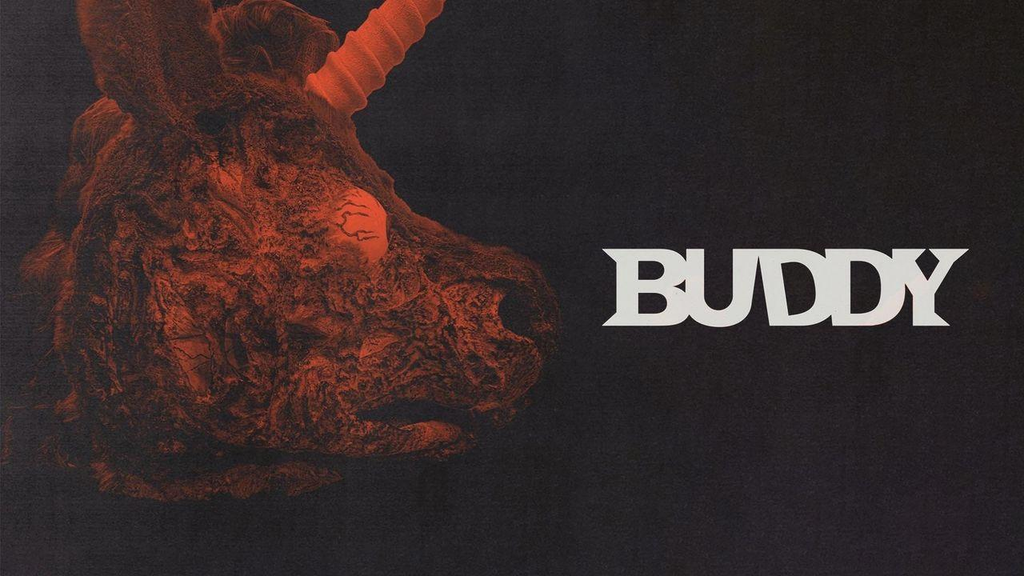
That is the unsettling idea behind Buddy, the new horror-comedy from filmmaker Casper Kelly. The film takes the familiar look of colorful children’s programming—bright costumes, cheerful songs, simple life lessons and an overly friendly mascot—and turns it into something much darker.
At the center of the story is Buddy, a bright orange unicorn who hosts the fictional children’s program It’s Buddy!. He looks like the kind of character designed to make children smile. But beneath that cheerful appearance is something much more disturbing.
Starring Cristin Milioti, Keegan-Michael Key, Topher Grace, Michael Shannon and Patton Oswalt, Buddy mixes horror, dark comedy and psychological elements while playing with the nostalgia associated with children’s television.
Who Is Buddy? 🦄
Buddy begins inside the world of It’s Buddy!, a fictional children’s television show set in 1999.

Buddy is an orange unicorn who teaches children lessons through songs, games and activities. The world appears colorful and harmless, but the movie quickly reveals that something is seriously wrong.
When one of the children refuses to participate in Buddy’s activities, the supposedly friendly television host reveals a much darker side.
The children eventually realize that they are not simply participating in a television program. They are trapped in a dangerous world controlled by Buddy, and escaping means confronting the reality behind the cheerful facade.
The story also follows Grace, played by Cristin Milioti, whose life in the real world becomes connected to the disturbing events surrounding the children’s show.
Who Is Buddy?
Buddy is the central character—and the reason the movie’s concept works so well.
He is designed like a classic children’s television mascot: bright orange, energetic and constantly encouraging the children around him to participate.
But the contrast between Buddy’s appearance and his behavior is where the horror comes from.
Keegan-Michael Key provides Buddy’s voice, while Sergey Zhuravsky performs the character physically. This combination gives Buddy a deliberately artificial quality, making him feel like a television mascot while allowing the character to become increasingly threatening.
The film uses that contrast throughout the story.
A character who should represent friendship and happiness instead becomes a source of fear.
Who Stars in Buddy?
The movie has a surprisingly recognizable cast for an independent horror film.
Cristin Milioti plays Grace, a mother whose connection to the mysterious children’s show becomes increasingly important.
Keegan-Michael Key voices Buddy, bringing a recognizable comedic performer into a very different kind of role.
Topher Grace plays Ben, Grace’s husband.
Michael Shannon also appears in the film, including as the voice of Willie, while Patton Oswalt voices Strappy.
The young cast includes Delaney Quinn as Freddy, with Luke Speakman, Tristan Broders and other performers playing children caught inside Buddy’s strange world.
Why Does Buddy Look Like a 1990s Children’s Show?
The movie’s visual style is one of its most important ideas.
Rather than simply putting a scary creature into an ordinary horror setting, Casper Kelly builds much of the film around the visual language of children’s television.
The fictional show It’s Buddy! features colorful environments, songs, games and exaggeratedly cheerful characters.
That familiarity makes the horror more uncomfortable.
The audience knows what a children’s program is supposed to look like. Buddy takes those familiar elements and gradually makes them feel threatening.
The approach also connects with the movie’s nostalgia for older children’s programming. Critics have noted similarities to the style and atmosphere of shows such as Barney & Friends, while the film uses those recognizable ideas for its own darker purpose.
The Horror Behind the Happy Face
One of the most interesting things about Buddy is that its horror isn’t based entirely on making Buddy look frightening from the beginning.
Instead, the movie starts with something that looks almost harmless.
Buddy smiles.
Buddy sings.
Buddy teaches lessons.
Then the rules of his world become increasingly disturbing.
That gradual change is what makes the premise work. The audience is encouraged to recognize the familiar children’s-TV formula before seeing how easily that formula can become sinister.
The movie therefore isn’t simply asking, “What if a children’s mascot was evil?”
It is also playing with the uncomfortable idea of a character who demands happiness and obedience from children.
What Makes the Story Different From a Typical Slasher?
Although Buddy contains violent horror and slasher elements, it isn’t structured like a conventional masked-killer movie.
The children’s television setting gives the filmmakers room to create a strange world with its own rules.
The children aren’t simply trying to survive a monster chasing them through a house. They have to understand the environment around them and find a way out of Buddy’s world.
The story eventually expands beyond the television setting and follows Grace in the real world.
That shift gives the film a psychological dimension and connects the strange children’s program with memories and trauma outside it.
Who Directed Buddy?
Buddy was directed and co-written by Casper Kelly, with Jamie King also credited as a writer.
Kelly is known for the surreal Adult Swim short Too Many Cooks, which became an internet phenomenon because of its unusual combination of sitcom conventions and horror.
That background helps explain why Buddy has such an unusual tone.
Instead of treating its children’s-TV setting as a simple joke, Kelly builds an entire horror world around it.
The movie also marks Kelly’s feature directorial debut.
When Was Buddy Released?
Buddy premiered at the 2026 Sundance Film Festival before moving on to other festival screenings.
The film received a theatrical release in the United States in late August 2026 through Roadside Attractions and Saban Films.
Its theatrical run means viewers can now see the film rather than simply waiting for its release.
Is Buddy Available to Stream?
At the moment, Buddy is primarily a theatrical release.
There is no confirmed subscription-streaming date yet. Digital availability is expected to come later, but the exact timing can vary depending on the distributor’s release plans.
Current reporting suggests a digital release could arrive around October 2026, although that is an estimate rather than an officially confirmed date.
So if you want to watch Buddy immediately, checking local theater listings is the safest option.
What Are Critics Saying About Buddy?
The response to Buddy has been mixed but generally interested in the film’s unusual concept.
Rotten Tomatoes currently shows positive reviews highlighting the movie’s strange premise, handmade visual style and willingness to take creative risks.
Some critics have particularly praised the film’s first act and the way it turns familiar children’s entertainment into horror.
Others have argued that the movie’s ideas are stronger than some of its later storytelling, especially when it moves between the children’s television world and Grace’s story.
That divide is worth knowing before watching the film: Buddy is clearly more interested in being strange and unconventional than in following a completely straightforward horror formula.
Is Buddy Worth Watching?
If you enjoy horror movies that experiment with unusual concepts, Buddy is worth putting on your list.
Its biggest strength is the central idea: taking something designed to make children feel safe and turning it into a source of fear.
The combination of children’s television nostalgia, dark comedy and horror also gives the movie an identity that separates it from more conventional slashers.
However, viewers looking for a straightforward monster movie may find its shifts in tone and story unusual.
Buddy is at its best when it embraces the absurdity of its premise and allows the cheerful television aesthetic to become increasingly disturbing.
Final Thoughts
Buddy takes a simple horror question and gives it an unusually elaborate answer:
What if the friendly children’s TV character everyone trusted was never really friendly at all?
By creating It’s Buddy! as a fictional world, Casper Kelly can explore that idea through colorful sets, strange characters, dark comedy and genuine horror.
The result is not simply a movie about a scary unicorn.
It’s a movie about the unsettling space between childhood comfort and adult fear—and what happens when something designed to make children happy becomes impossible to escape.
For horror fans looking for something different from another standard slasher, Buddy offers a bizarre alternative.
And perhaps that’s the strangest thing about Buddy himself: the brighter he smiles, the more uncomfortable the world around him becomes.
Sources
- PEOPLE — background on the film, cast and Buddy’s concept
- Rotten Tomatoes — critic reviews and movie information
- Apple TV — cast, synopsis and movie details
- TheWrap — release and production information
- Decider — theatrical and digital-release information